Outreach
STEMArts Scientist
Summer 2025 – present
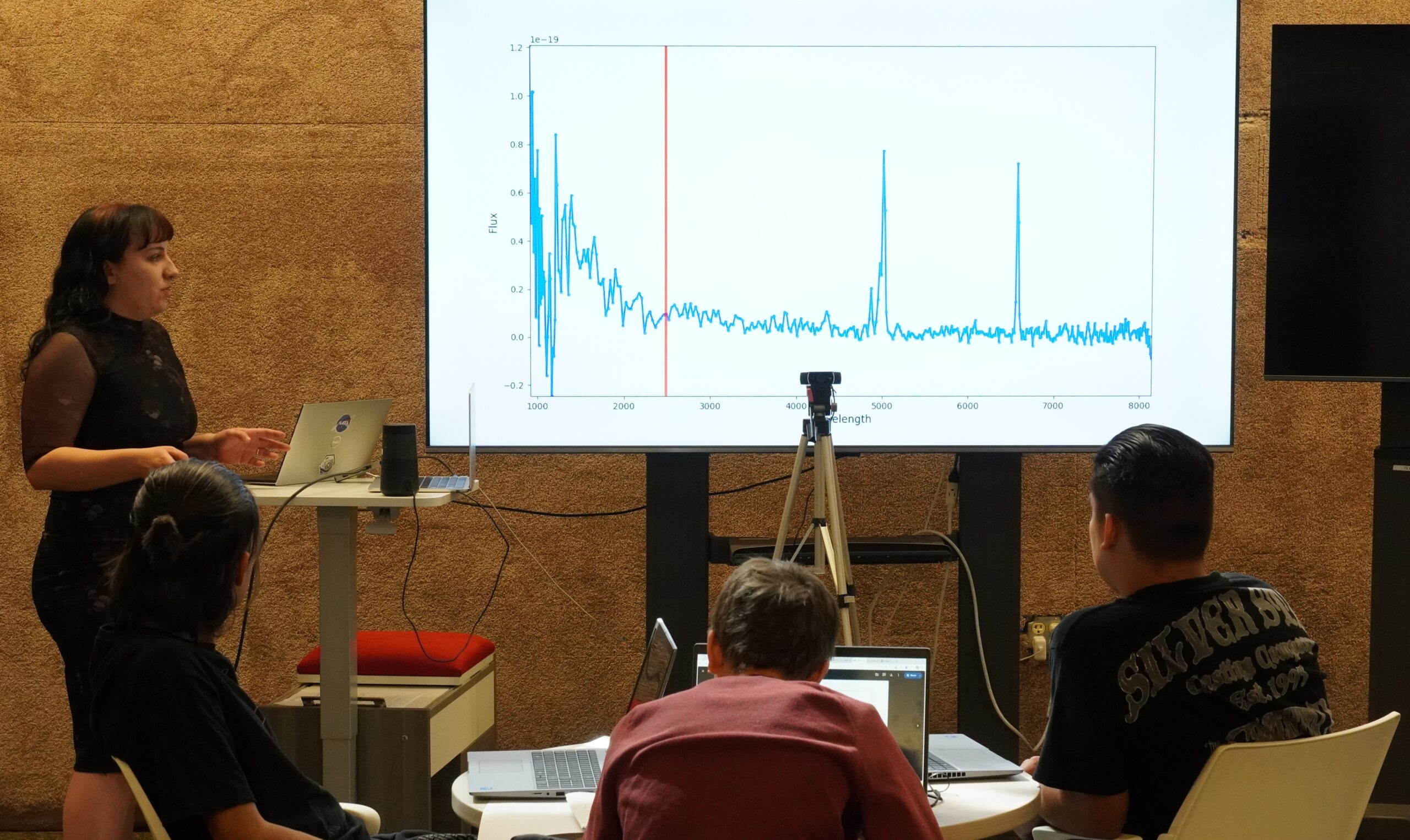
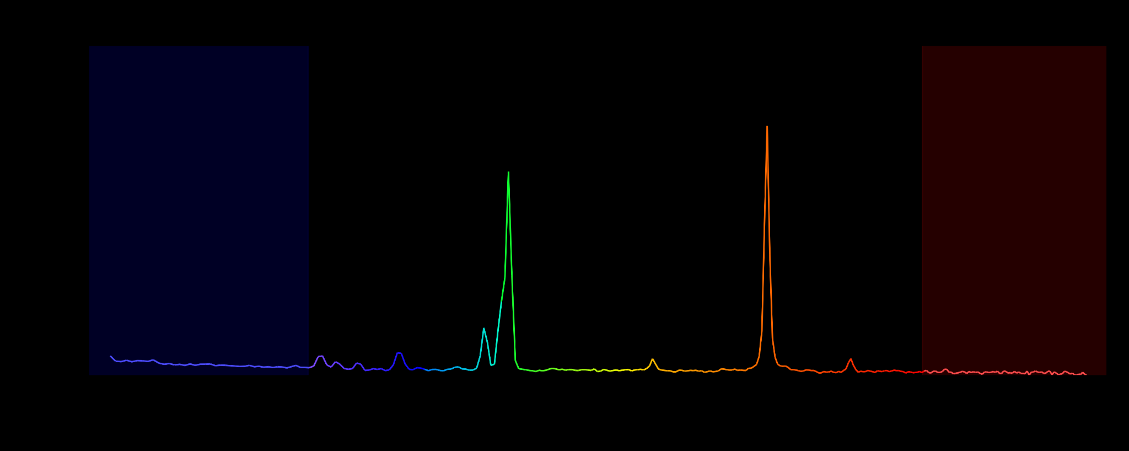
I worked with the STEMArts team in Taos, New Mexico to build a workshop for young students interested in art and science. I sonified data from the JWST CAOERS NIRSpec prism survey to create audio of the emission lines and continuum for extreme emission line galaxies. Additionally, I translated rest-frame wavelengths into RGB values giving “colors” to each emission line. Students attended weekly meetings led by STEMArts coordinators, composers, visual artists, and myself where they learned how to turn emission line audio and RGB colors into performing art pieces with a techinque called Live Coding. This emerging art form involves editing code live in front of an audience to change both the colorful visuals and the music audio playing in real time. Students worked in pairs, one doing an audio performance while the other performed a visual inspired by the rest-frame colors. A professional composer, Alexandra Cárdenas, and a professional visual artist, MAGENTA, worked together to create a capstone performance. All parties performed at the Taos Film Festival and the Los Alamos Science Fair. At both locations, I gave public-level science talks to introduce the data. I continue to give talks at workshops periodically as I am needed. STEMArts continues to expand this and other forms of artistic scientific expression with their students.
Planetarium presenter, Pajarito Environmental Education Center (PEEC)
Los Alamos, Summer 2025 – present
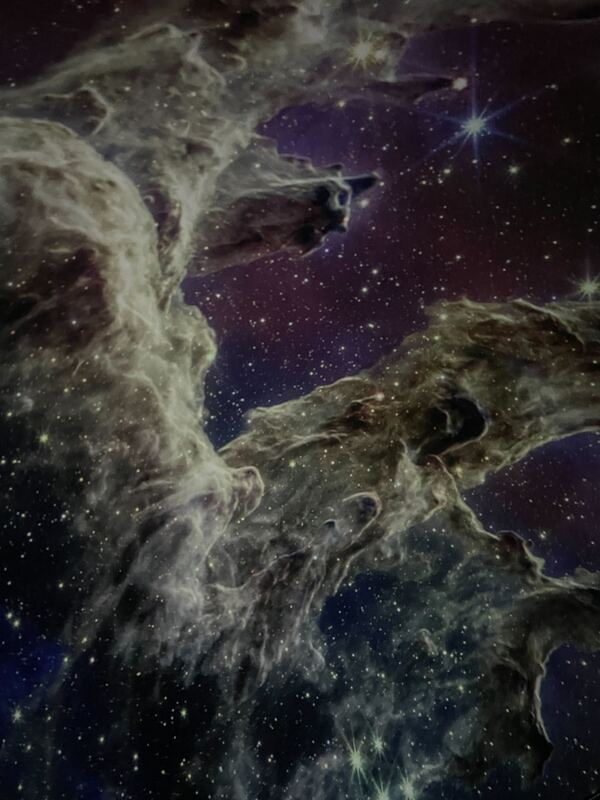
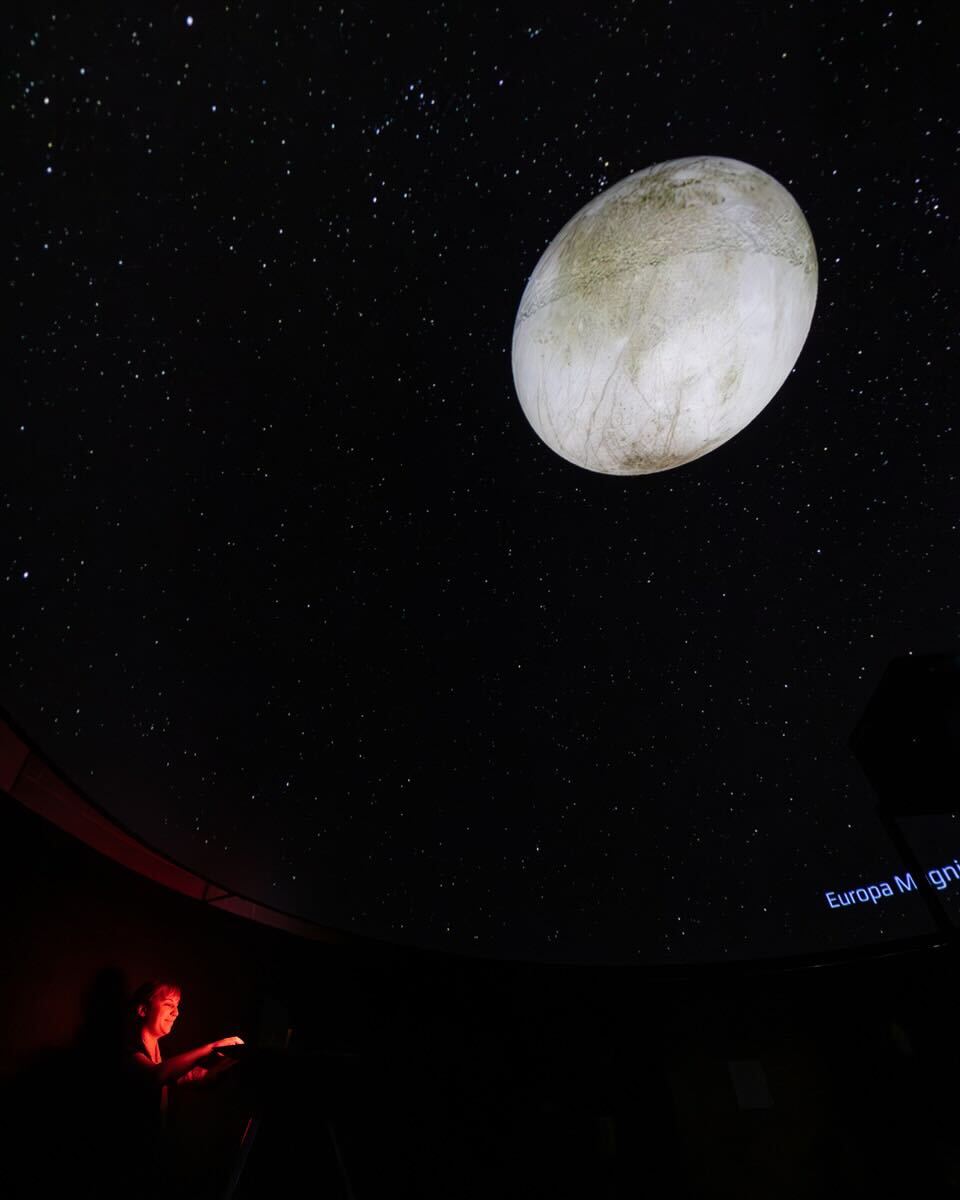
I write and give public planetarium presentations at the PEEC, especially promoting new discoveries in JWST and public science education. I build shows in an interactive HTML-based coding interface called StratoScript, part of the Digitarium software. I also volunteer for space camps and other events.
Planetarium presenter, University of Connecticut
Fall 2024 – Summer 2025
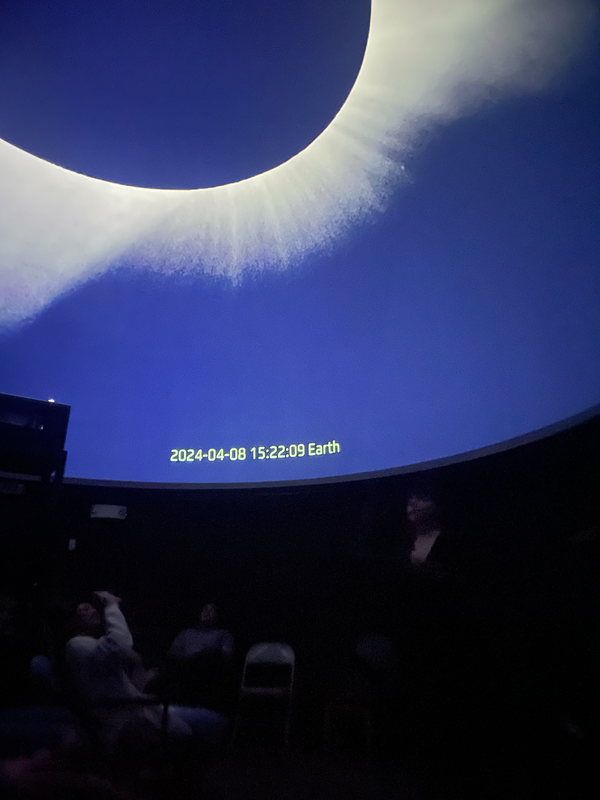
I worked with professor Matt Guthrie and another graduate student, Madisyn Brooks, among many other UConn physics volunteers, to restore an abandoned planetarium. I designed and performed shows across a variety of astrophysics topics, preserving planetarium shows in the Stratoscript software of the Digitarium to enable training of new presenters and future generations of UConn physics students. I managed the social media for the planetarium and organized both weekly and special shows, especially shows on eclipses, aliens, and JWST news.
BEAConn AI Safety Organization
Fall 2024 - Spring 2025
Co-founded UConn’s AI safety organization and acted as vice president. Helped organize monthly meetings and led a technical fellowship for students each semester, meeting weekly to cover technical topics in AI safety such as reward misspecification, goal misgeneralization, scalable oversight, red teaming, mechanistic interpretability, model internals, and policy. I also designed and hosted workshops for faculty and students on LLM use cases and ethical practices and held monthly faculty-only office hours to help demystify LLMs and brainstorm use cases including adapting classrooms and research. I led discussion among physics graduate students and faculty at UConn surrounding LLM use in research environments through seminar, a public debate with a fellow graduate student, and open discussions.
Boyce Astro
San Diego, October 2018 – August 2022
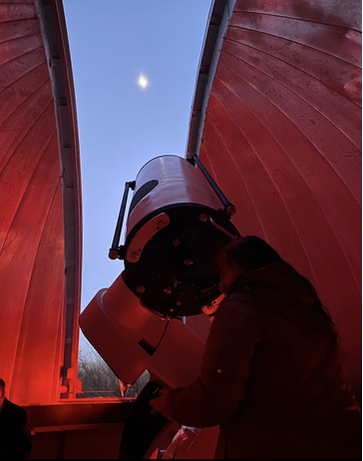
Mentored community college students to teach the basics of the research process. Teams went through the process of selecting a double star (stars that appear near each other on the sky in pairs of two or more but whose gravitational relationship is unknown) from the washington double star catalog, proposing observations to be taken through the Las Cumbres Observatory Network, and writing a science paper on the observations to determine the nature of the star.